Table of Content
- What are the similarities and differences between a cash-out refi and a home equity loan
- Orchard Bank Credit Cards | NOT a Scam!
- Cash-out refinance vs. HELOC: What’s the same and what’s different
- FHA Cash-Out Refinancing
- Are you currently working with a real estate agent?
- Pros and cons of a cash-out refinance
If current interest rates are lower than the rate on your original mortgage, you could access money from your equity and lower your mortgage rate, too. SuperMoney.com is an independent, advertising-supported service. The owner of this website may be compensated in exchange for featured placement of certain sponsored products and services, or your clicking on links posted on this website.
Before deciding which of these home equity products is right for you, consider the benefits and risks of both options in addition to researching individual lenders. The benefit of using a HEA is that you won’t have a traditional monthly mortgage payment that accrues interest. The upside of a cash-out refinance compared to other loans may be hard to ignore if you have liquidity needs. However, no financial transaction is without risk, and a cash-out refinance is no exception. You’re probably starting to get an idea of which type of financing fits your situation. Both forms of refinancing can make sense if you can get a good interest rate on the new loan and have a sound use for the money.
What are the similarities and differences between a cash-out refi and a home equity loan
That means the lender has the first claim to the property if you default on your loan. Though refinancing often comes with a lower interest rate than a home equity loan, it won’t necessarily be lower than the one on your current loan. Cierra Murry is an expert in banking, credit cards, investing, loans, mortgages, and real estate. Most home equity loans are shorter, repayable over five to 20 years.
Many loan types require that you leave some equity in the home. Let’s look at the differences between cash-out refinances and home equity loans so you can pick the one that’s right for you. While a home equity loan for debt consolidation might work for some people, it’s not necessarily the best choice for everyone. If you need cash and have a sizable amount of home equity built up, you may consider a cash-out refinance or a home equity loan. In theory, market changes are not a concern in the short term unless you must sell your home.
Orchard Bank Credit Cards | NOT a Scam!
Just as with a cash-out refinance, your home equity loan is backed by your property. If you can’t afford the payments and end up defaulting on the loan, you may lose your home. You could borrow 80% of the home’s value, which would be $240,000. After paying off the $150,000 on your existing mortgage, you’d close with a check for $90,000.

And although the monthly payments may be higher with a shorter-term loan, you’ll typically pay less interest. With good credit, home equity loan interest rates may be lower than what you’d get with credit cards or personal loans. You get a manageable repayment plan with fixed monthly payments for the duration of your loan term. A cash-out refinance can be especially beneficial if mortgage rates have dropped since you took out your original mortgage or refinanced previously. This can lower your cost of borrowing and allow you to access cash from your home equity at the same time. Enter your details, a new interest rate, and loan type in Better Mortgage's cash-out refinance calculator to see how much you can cash out.
Cash-out refinance vs. HELOC: What’s the same and what’s different
Investopedia requires writers to use primary sources to support their work. These include white papers, government data, original reporting, and interviews with industry experts. We also reference original research from other reputable publishers where appropriate. You can learn more about the standards we follow in producing accurate, unbiased content in oureditorial policy. Born and raised on a farm in the Ozarks, Patrick has a knack for making the best out of the worst situations. Where others see flooded farmland, he sees lakefront real estate.
Cash-out refinance incurs closing costs similar to your original mortgage. Learn the ins and outs of a home equity loan vs. a home equity line of credit to decide which option is best for your financial goals. That could make a difference in how long it takes you to finish repaying your mortgage. You’ll have two mortgage payments to keep track of and make each month. Also known as a second mortgage, a home equity loan is a new loan that you take out in addition to your current mortgage, which you’ll continue to pay.
A CU SoCal HELOC or home equity loan allows you to leverage the equity in your home to help you achieve your financial goals. Whether you’re looking to start that big renovation, make emergency repairs, or simply need additional cash-on-hand, we’re here to help make it happen.No points. Credit Union of Southern California offers Home Equity Lines of Credit and mortgage refinancing.
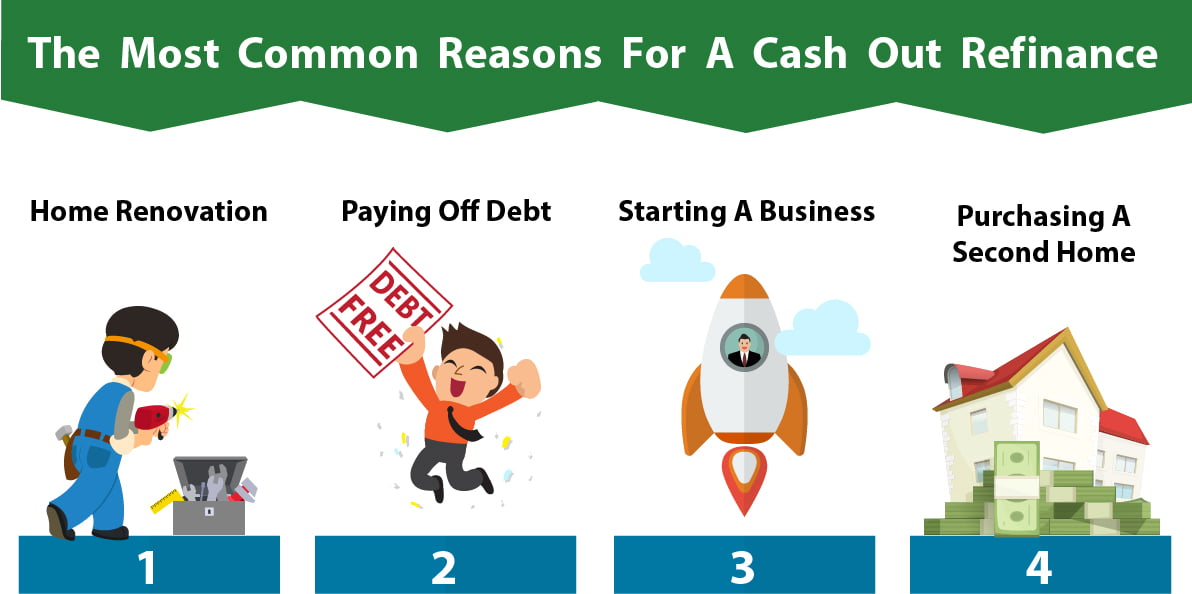
Private mortgage insurance typically costs from 0.55% to 2.25% of your loan amount each year. Of course, this means your monthly payment may increase or decrease as well. Some lenders might even work with borrowers with poor credit, but they could require borrowers to have more home equity and less overall debt, while imposing higher interest rates. If you have questions about your eligibility, loan terms, or rates, consider reaching out to potential lenders directly. Say your home is worth $250,000, and you owe $150,000 on your mortgage loan. When you divide $150,000 by $250,000, you get 0.60 which represents a 60% LTV.
When applying for a mortgage credit product, lenders will commonly require you to provide a valid social security number and submit to a credit check . Consumers who do not have the minimum acceptable credit required by the lender are unlikely to be approved for mortgage refinancing. Answering these questions can give you a little insight as to what you need.

"Most people have good enough credit but the best rates go to those with 740 or above," added Greg McBride, chief financial analyst at Bankrate.com. A cash-out refinance is a type of mortgage refinance that takes advantage of the equity you've built over time and gives you cash in exchange for taking on a larger mortgage. In other words, with a cash-out refinance, you borrow more than you owe on your mortgage and pocket the difference.


No comments:
Post a Comment